01 · Outdoors2 source records
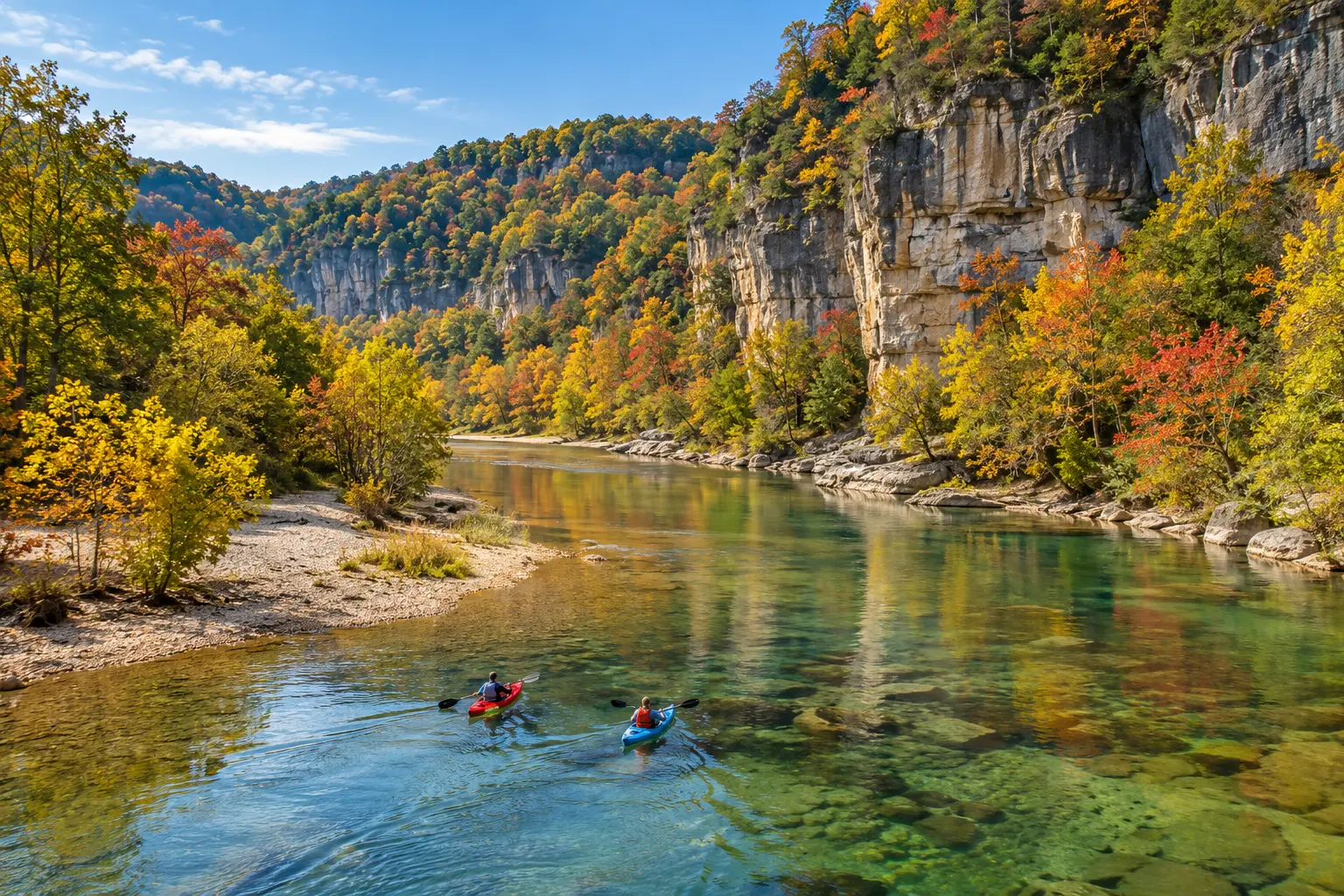
Buffalo National River
Buffalo National River remains one of the few undammed rivers in the lower 48, offering 135 miles of free‑flowing water framed by towering Ozark bluffs. Its mix of rapids and tranquil pools makes it a prime spot for canoeing, kayaking, and wildlife viewing.
Before you go: Consider a half‑day float on a calm section for beginners, or a full‑day paddle that includes a short hike to a scenic overlook for more adventurous travelers.
02 · Outdoors2 source records
Hot Springs National Park
Hot Springs National Park combines natural geothermal springs with historic bathhouse architecture, providing both therapeutic waters and cultural immersion within a compact, town‑center setting.
Before you go: Plan a morning hike on the park’s forested trails, then unwind in a historic bathhouse; this dual experience captures both the natural and built heritage of the area.
03 · History2 source records
Arkansas Post National Memorial
Arkansas Post National Memorial sits at the meeting point of two rivers and represents centuries of cultural exchange, conflict, and cooperation among Indigenous peoples, European explorers, and early American settlers.
Before you go: Schedule a guided interpretive talk to deepen understanding of the site’s layered history, followed by a brief walk along the riverbank to visualize the historic confluence.
04 · History2 source records
Butterfield Overland National Historic Trail
The Butterfield Overland National Historic Trail traces the 1857 overland mail route that linked the East Coast with the Far West, illustrating the challenges of 19th‑century long‑distance communication and travel.
Before you go: Visit a trail marker or visitor center, then drive a short segment of the original route to appreciate the landscape that stagecoaches once traversed.
05 · History2 source records
Fort Smith National Historic Site
Fort Smith National Historic Site preserves nearly 80 years of frontier history, from its 1817 establishment through the era of Judge Isaac C. Parker, highlighting military life, the Trail of Tears, and law‑enforcement drama on the edge of Indian Territory.
Before you go: Allocate time for the museum exhibits and a self‑guided walking tour of the historic fort grounds to experience the layered narratives of frontier justice.
06 · History2 source records
Little Rock Central High School National Historic Site
Little Rock Central High School National Historic Site marks the 1957 confrontation that tested the nation’s commitment to civil‑rights enforcement, showcasing the bravery of the Little Rock Nine and the broader struggle for educational equality.
Before you go: Take the audio tour to hear personal accounts, then reflect at the memorial plaza; this concise visit offers powerful insight into a pivotal moment in American history.