WTDO USA

THE WTDO FIELD GUIDE · Florida

Florida’s Federal Outdoors: A Field Guide to Six Must‑See Parks & Monuments

This field guide walks travelers through Florida’s six federal outdoor destinations, pairing each park or monument with practical planning advice. It explains how to match personal interests—wetland biodiversity, marine recreation, historic forts, or barrier‑island ecology—to the right stop, offers a flexible loop itinerary that can be stretched or shortened, outlines essential booking and access checks via NPS and Recreation.gov, and highlights the key trade‑offs between wildlife focus, cultural immersion, travel distance, and seasonal conditions. The result is a ready‑to‑use framework for a balanced, self‑guided adventure across the state’s most iconic federal lands.

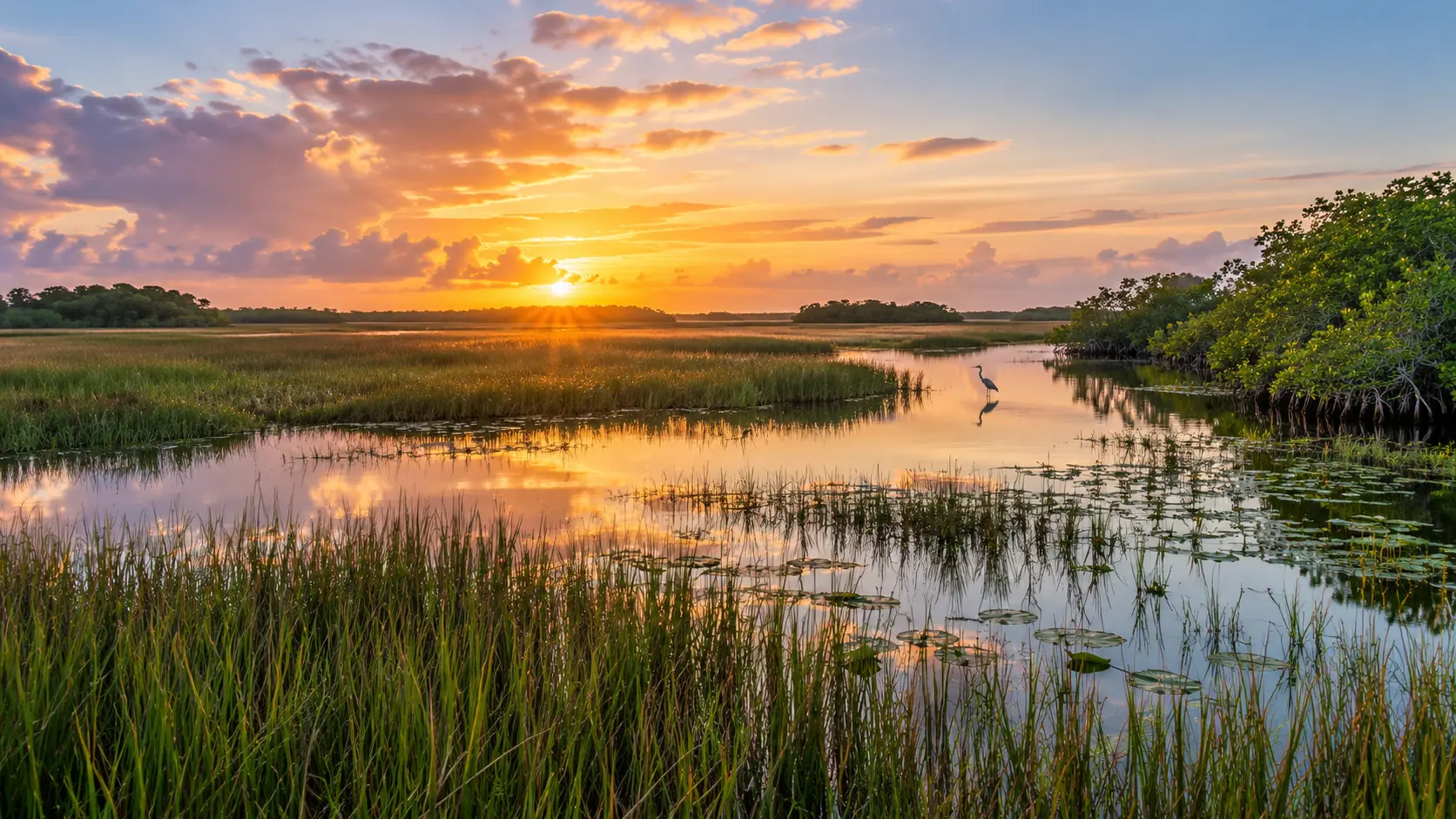
Image of Everglades National Park

CHOOSE YOUR OWN WAY

Start with a place that fits your pace.

These are editorial starting points. Reference counts show linked source records, not popularity or ratings. Check current access information before setting out.

01 · Outdoors2 source records

Everglades National Park

Everglades National Park stands as the United States’ first park created specifically for biodiversity protection, encompassing 1.5 million acres of interconnected wetland, forest, and marine habitats. Its vast mosaic supports iconic species such as the American alligator, West Indian manatee, and a multitude of wading birds, while also serving as the primary drinking‑water source for South Florida’s growing population. The park’s international designations underscore its ecological importance, and its network of boardwalks, airboat routes, and hiking trails offers diverse recreational opportunities—from quiet bird‑watching to guided swamp tours. Visiting Everglades provides a rare chance to experience a subtropical ecosystem that is both a critical water reservoir and a living laboratory for conservation.

Before you go: Consider spending a morning in Everglades—arrive early for cooler temperatures, explore the Anhinga Trail or an airboat ride, and capture sunrise over the sawgrass marsh before heading north.

02 · Outdoors2 source records

Big Cypress National Preserve

Big Cypress National Preserve protects over 729,000 acres of swamp that feeds the neighboring Everglades, delivering fresh water essential to the health of coastal estuaries along Florida’s southwest shoreline. The preserve’s blend of tropical and temperate plant communities creates a unique transition zone where cypress domes, pine flatwoods, and hardwood hammocks intermix. This habitat supports a rich assemblage of wildlife, most notably the endangered Florida panther, whose elusive presence underscores the preserve’s conservation value. In addition to its ecological role, Big Cypress offers a network of unpaved roads and boardwalks that allow visitors to experience the quiet, water‑logged landscape on foot or by bike, providing a more intimate perspective than the larger Everglades.

Before you go: Plan a mid‑day hike on the Loop Road or the Florida Trail segment within Big Cypress; bring binoculars for panther spotting and stay hydrated for the swamp heat.

03 · Outdoors2 source records

Biscayne National Park

Biscayne National Park, located just south of Miami, protects a rare combination of crystal‑clear aquamarine waters, emerald‑colored islands, and vibrant coral reefs teeming with tropical fish. The park’s marine environment represents one of the few remaining extensive reef systems in the United States, offering world‑class snorkeling and scuba opportunities. Beyond its underwater allure, Biscayne holds evidence of 10,000 years of human occupation, from prehistoric indigenous peoples to historic shipwrecks and even presidential visits. The park’s shoreline and mangrove islands provide tranquil settings for boating, fishing, and kayaking, while the visitor center interprets both natural and cultural histories. Its proximity to a major urban center makes it an accessible escape for water‑based recreation without sacrificing ecological significance.

Before you go: Reserve a boat launch at the Biscayne visitor center for an afternoon of snorkeling or a guided reef tour; remember to check tide charts and bring reef‑safe sunscreen.

04 · Outdoors2 source records

Canaveral National Seashore

Canaveral National Seashore encompasses a dynamic barrier island shaped by shifting dunes, coastal hammocks, and the brackish waters of Mosquito Lagoon. The seashore’s landscape preserves ancient Timucua shell mounds, offering a tangible link to thousands of years of human habitation. Its protected dunes and maritime forests support a diversity of plant and animal life, including nesting sea turtles, migratory shorebirds, and a variety of coastal flora. Visitors can walk along pristine beaches, explore the lagoon by kayak, or hike the nature trails that wind through hammocks and marshes. The combination of natural beauty, archaeological sites, and relatively low visitor density creates a sense of solitude uncommon on Florida’s more crowded coastlines.

Before you go: Arrive before sunrise for a quiet beach walk on the dunes, then paddle a kayak in Mosquito Lagoon to observe wildlife in a tranquil setting.

05 · History2 source records

Castillo de San Marcos National Monument

Castillo de San Marcos National Monument in St. Augustine preserves the oldest masonry fortification in the continental United States, constructed by the Spanish in the late 17th century to defend the Atlantic trade route. The coquina stone walls have withstood centuries of conflict, serving as a tangible record of over 450 years of cultural intersections among Spanish, British, Confederate, and American forces. The monument’s interpretive programs illustrate the fort’s strategic role, daily life of soldiers, and the broader colonial history of Florida. As a well‑preserved historic structure, Castillo offers visitors a concrete connection to early European settlement and military engineering, making it a cornerstone for understanding the state’s complex past.

Before you go: Join a ranger‑led tour of Castillo de San Marcos to learn about its 450‑year history and explore the bastions, then linger on the adjacent waterfront for panoramic views of the Matanzas River.

06 · History2 source records

De Soto National Memorial

De Soto National Memorial marks the 1539 landing of Spanish explorer Hernando de Soto’s expedition in Tampa Bay, an event that launched a four‑year, 4,000‑mile journey across the southeastern United States. The memorial interprets the encounter between de Soto’s mixed force of soldiers, mercenaries, craftsmen, and clergy and the indigenous peoples who fiercely defended their homelands. This early colonial episode set in motion a series of cultural exchanges, conflicts, and disease transmissions that would shape the emerging United States. The site’s visitor center and surrounding trails provide immersive storytelling about the expedition’s hardships, the resistance of native groups, and the lasting historical impact of this early European incursion.

Before you go: Spend an afternoon walking the interpretive trail and visiting the museum exhibits; consider a guided talk to deepen understanding of the 1539 landing and its legacy.

MAKE THE MOST OF YOUR VISIT

Turn the places into a plan.

How to Choose Your Stops

Choosing which federal sites to include in a Florida outdoors itinerary begins with the experience you value most. If biodiversity and wetland immersion are top priorities, Everglades National Park offers 1.5 million acres of protected habitats and serves as a critical drinking‑water source for South Florida. For those drawn to the health of the Everglades’ watershed, Big Cypress National Preserve supplies the fresh‑water inflow that sustains coastal estuaries and shelters the endangered Florida panther. Coastal water enthusiasts will find Biscayne National Park’s aquamarine waters, coral reefs, and 10,000 years of human history ideal for boating, fishing, or diving. History‑focused travelers can step into the oldest masonry fort in the continental United States at Castillo de San Marcos, or trace the 1539 landing of Hernando de Soto at his National Memorial. Finally, Canaveral National Seashore blends barrier‑island ecology with ancient Timucua shell mounds, offering a blend of nature and archaeology. By matching each site’s core attribute—wetland biodiversity, watershed health, marine recreation, historic fortification, early colonial narrative, or barrier‑island ecosystems—to your interests, you can build a balanced itinerary that feels purposeful rather than random. Consider also logistical factors such as driving distance between sites, seasonal visitor peaks, and the need for specialized gear like boats or hiking boots. A short list that reflects both passion and practicality will keep the trip enjoyable.

A Flexible Visit Sequence

Florida’s federal sites stretch from the southern wetlands to the Atlantic coast, yet a looped route lets you adapt daily mileage without backtracking. Begin in the Everglades, where a morning airboat or boardwalk walk introduces the park’s vast wetland tapestry. From there, a short drive north‑west reaches Big Cypress National Preserve; a mid‑day hike along the Loop Road can reveal panther habitat and swamp‑forest transitions. Heading east, Biscayne National Park is best accessed via a boat launch near Miami—spend an afternoon snorkeling or cruising among coral reefs. Continue north‑east along the coast to Canaveral National Seashore; a sunrise walk on the dunes or a kayak in Mosquito Lagoon offers a calm contrast. The next leg turns inland to St. Augustine, where Castillo de San Marcos invites a guided tour of its 450‑year‑old stone walls. Finally, travel west to De Soto National Memorial near Tampa Bay to explore interpretive trails that recount the 1539 landing and its lasting impact. Because each segment can be shortened or extended, the sequence remains flexible: you may swap Biscayne for a longer stay in the Everglades, or insert an extra night at Canaveral if beach time is a priority. The key is to treat the loop as a framework, not a rigid schedule.

Practical Booking and Access Checks

Before you set out, verify that each federal site is open and that any required reservations are in place. The National Park Service and Recreation.gov host the official entry information for all six locations; checking both sites ensures you see current alerts such as seasonal road closures in Big Cypress or water‑level restrictions in Everglades. Some parks, like Biscayne, require a separate boat launch permit if you plan to launch a personal vessel, while Canaveral National Seashore may limit camping to designated backcountry sites. Entrance fees are modest but differ—Everglades and Big Cypress are fee‑free, whereas Castillo de San Marcos and De Soto charge a small per‑vehicle charge. Accessibility considerations also matter: paved trails at De Soto and Castillo accommodate wheelchairs, while the boardwalks in Everglades and Big Cypress are designed for easy walking but may be muddy after rain. Finally, confirm that your vehicle meets any size restrictions for narrow swamp roads, and download offline maps from the NPS app to stay oriented where cell service fades. A quick checklist—open status, permits, fees, accessibility, vehicle suitability—prevents surprise roadblocks and lets you focus on the experience.

Traveler Tradeoffs to Consider

Every traveler must balance time, budget, and the type of immersion they seek. A wildlife‑focused itinerary that prioritizes Everglades and Big Cypress will involve early‑morning airboat rides and longer drives, but it maximizes chances to see alligators, wading birds, and the elusive Florida panther. Conversely, a culture‑heavy route that emphasizes Castillo de San Marcos and De Soto offers rich interpretive programs and easier walking, yet it sacrifices the deep‑water recreation of Biscayne. Beach lovers may allocate extra days to Canaveral’s dunes, accepting that inland swamp travel may be reduced. Seasonal weather also shapes trade‑offs: summer brings mosquito activity in the swamps, while winter offers cooler air for boardwalk hikes but can limit boat launches in Biscayne due to occasional cold snaps. Budget considerations include fuel for the roughly 600‑mile loop and modest entrance fees; however, many sites are free, allowing you to allocate funds toward guided tours or equipment rentals. By listing your top priorities—wildlife, water sport, historic immersion, or relaxed beach time—and weighing them against distance, season, and cost, you can craft a personalized plan that feels both adventurous and realistic.

BOOK YOUR OWN WAY

Explore options for your dates.

These links open booking partners. Some are affiliate links: WTDO may earn a commission. Final prices, availability and terms are shown by the provider. A destination may not carry through every partner link.

Compare places to stay ↗Find tours and experiences ↗Compare rental cars ↗Compare flights ↗

LET'S MAKE THIS YOUR TRIP

The list is a beginning. Your day is the point.

Carry the destination into a free plan, or explore more of Florida.

Plan my trip ↗Explore florida →

Editorial review: 2026-10-03. Official links were tested for reachability during research. Editorial approval does not guarantee current hours, access or availability; check each official site.